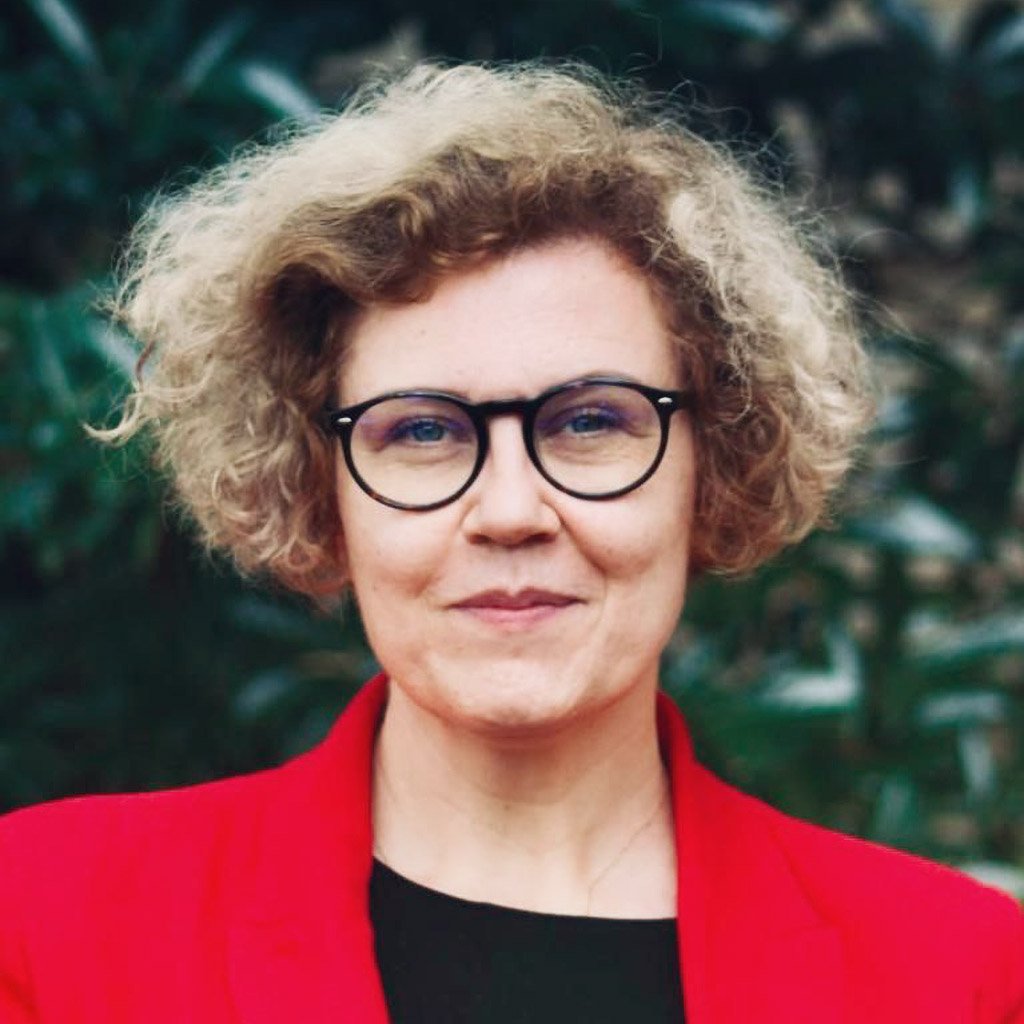
Daniela Faur (Member, IEEE) received the M.S. and Ph.D. degrees in electrical engineering from the Politehnica University of Bucharest (UPB), Bucharest, Romania, in 2002 and 2006, respectively. Since 2007, she has been a professor in Information Theory with the Department of Applied Electronics and Information Engineering, UPB. Her research focuses on Earth Observation (EO) data processing and visualization, with applications in agriculture, disaster and humanitarian crisis management, biodiversity monitoring, environmental conditions assessment, and soil analysis.
Dr. Faur has extensive experience in managing national and European research grants. She co-founded CEOSpaceTech, Bucharest, Romania, a research center for spatial information that advances EO technology and applications. She has served as Project Manager for initiatives such as GEODIM-PNCDII (Platform for Geo-Information in Support of Disaster Management), LEOSITS-STAR-ROSA (Long Term Data Exploitation for Satellite Image Time Series), and VATEO-PNCDI III (Visual Analytics Tool for Earth Observation Images). As Principal Investigator, she led the eVADE-ESA ITT project (Interactive Visual Analysis Tool for Earth Observation Data). In 2019, she co-founded OGOR, an agritech start-up creating a live journal for agricultural monitoring based on Copernicus satellite data.
Her involvement in user-centric projects such as H2020 SPACE-END: ENDEAVOUR Space HUB (2019–2021) highlights her expertise in engaging users and stakeholders to co-create innovative solutions that bridge EO technologies and societal needs. She was also UPB’s representative in the H2020 CENTURION project (2021–2023), focusing on AI datacube services.
She currently coordinates the AI4RISK project – Platform for Fusion and Management of Multi-Source Data Collections Exploitable by Artificial Intelligence Models for Risk Assessment and Predictive Analysis, AI4RISK, PN-IV-P6-6.3-SOL-2024-2-0251 (2024-2026), partnering with ESRI Romania, Transilvania University of Brașov and the Military Technical Academy ‘Ferdinand I’.
Dr. Faur’s current research explores integrating interactive tools for user engagement and fostering stakeholder collaboration in applications such as biodiversity monitoring and environmental assessment. She is a member of the IEEE Geoscience and Remote Sensing Society.